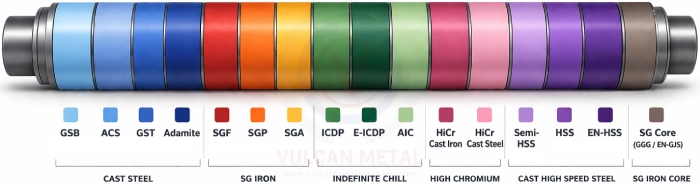
SG (ductile) Iron Roll materials rank among the most widely used solutions in rolling mills due to their balanced combination of wear resistance, thermal behavior and cost efficiency.
The boundary between SGF and SGP is generally well defined, but correct selection still requires experience, as SGF may lead to unsatisfactory results under unsuitable conditions.
Between SGP and SGA, the distinction is less clear and often falls into a grey zone, requiring careful evaluation of rolling conditions and performance requirements.
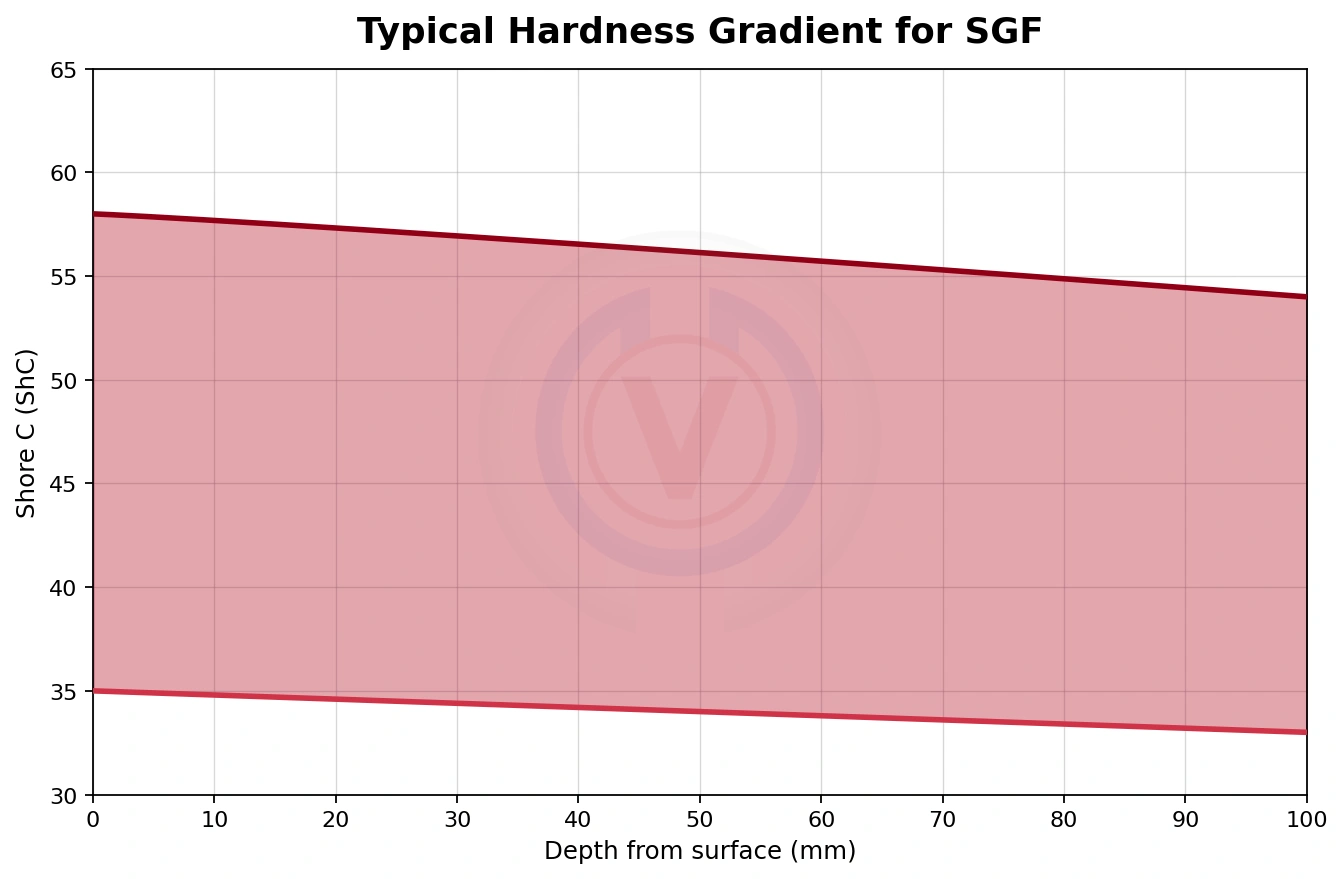
For SG iron rolls, hardness is often overemphasized, whereas chemical composition and resulting microstructure play a more critical role in performance.
In addition, SG iron rolls can be tailored through adjustments in composition, including elements such as silicon, chromium, and nickel, allowing adaptation to specific applications.
Selecting the most suitable roll material therefore often requires a case-specific technical evaluation. A brief technical exchange with Vulcan Metal can help determine the most appropriate solution based on current roll materials, mill configuration and operational experience.
SG Ferritic Nodular Iron (SG-F, SG-PF, SGPF, or SGF) rolls are a type of nodular cast iron rolling mill roll in which graphite is present in spheroidal form within a predominantly ferritic matrix.
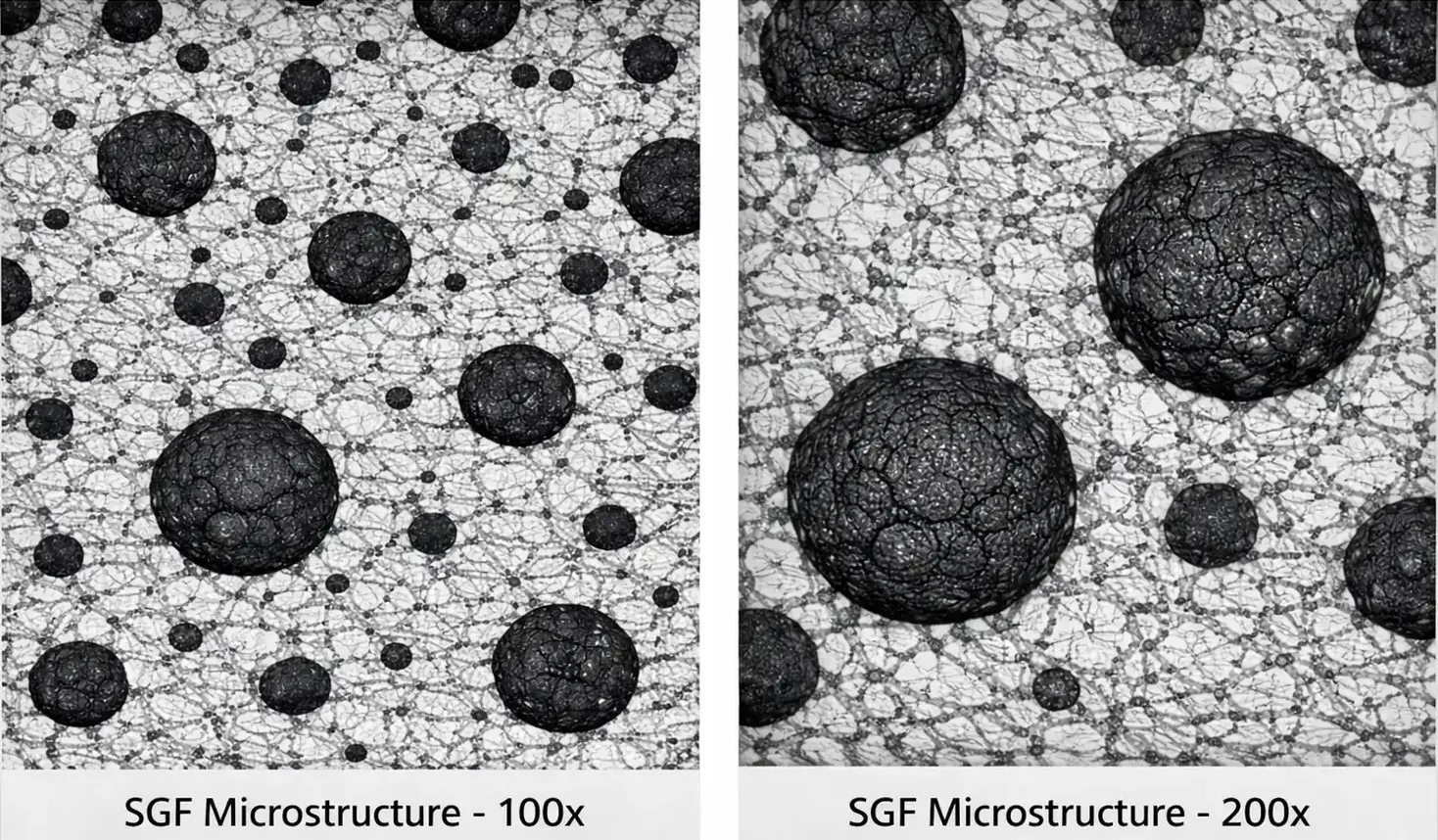
The typical microstructure consists of spheroidal graphite nodules surrounded by ferrite, often forming the characteristic “bull’s-eye” structure observed in ferritic nodular irons.
The ferritic matrix provides high toughness, excellent resistance to thermal fatigue and fire-cracking, and strong resistance to high rolling loads.
Due to the ferritic matrix and nodular graphite morphology, these rolls exhibit high thermal shock resistance and stable behavior under severe thermal cycling.
For this reason, SGF rolls are typically used in roughing stands where rolling speeds are low and thermal loads are high.
SG Pearlitic Chill Nodular Iron (SG-PC, SGPC, or SGP) rolls are a type of indefinite chill cast iron rolling mill roll in which graphite is present in nodular (spheroidal) form instead of flake form. The microstructure consists of spheroidal graphite and carbides distributed within a predominantly pearlitic matrix.
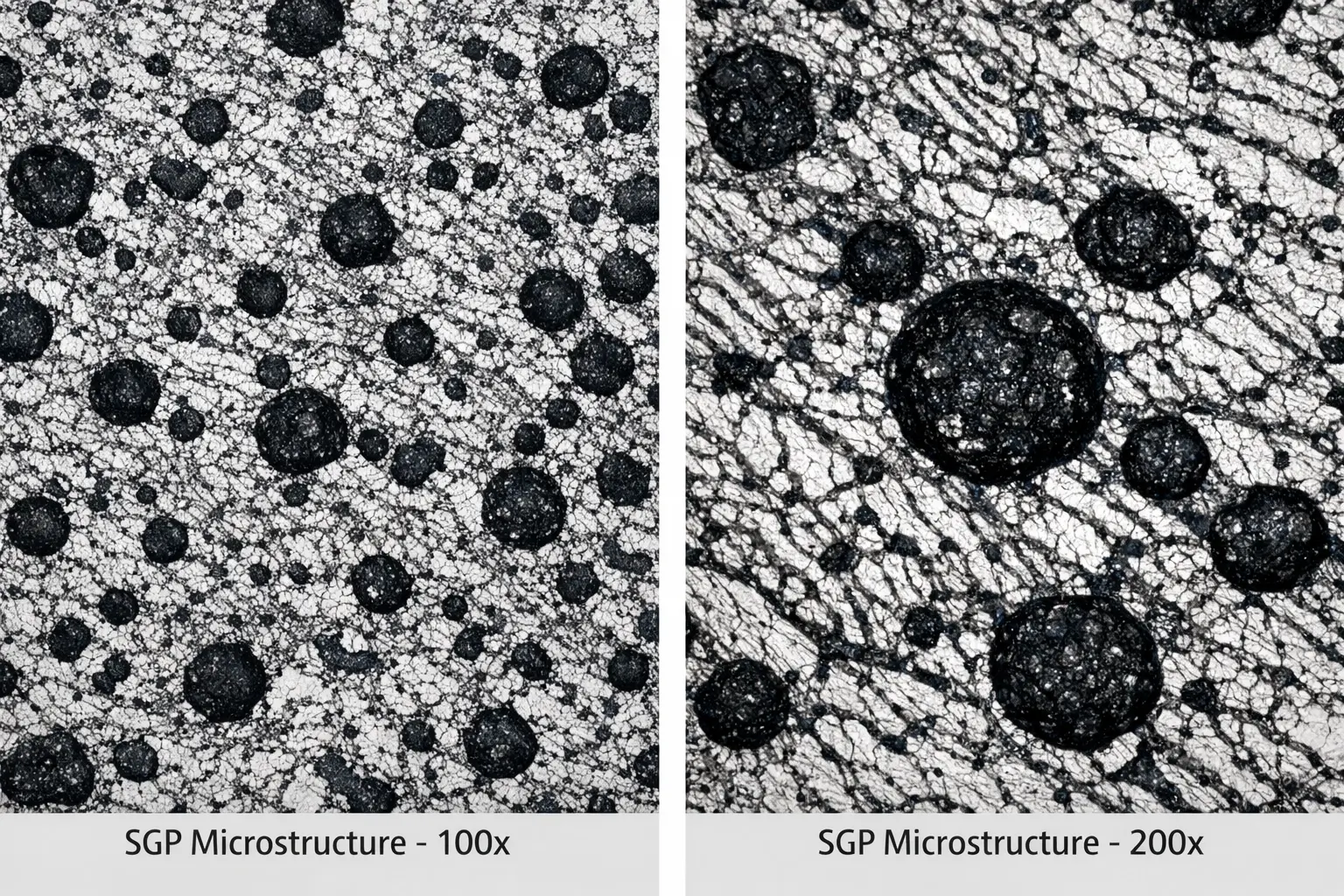
Compared
with flake graphite structures, nodular graphite produces lower internal stress
concentration, resulting in higher mechanical strength and improved resistance
to breakage.
The matrix
structure and carbide volume fraction vary depending on the required hardness
grade. Softer grades may contain pearlite with localized ferrite around the
graphite nodules, intermediate grades are typically fully pearlitic, while
harder grades may develop a pearlitic–bainitic matrix with increased carbide
content.
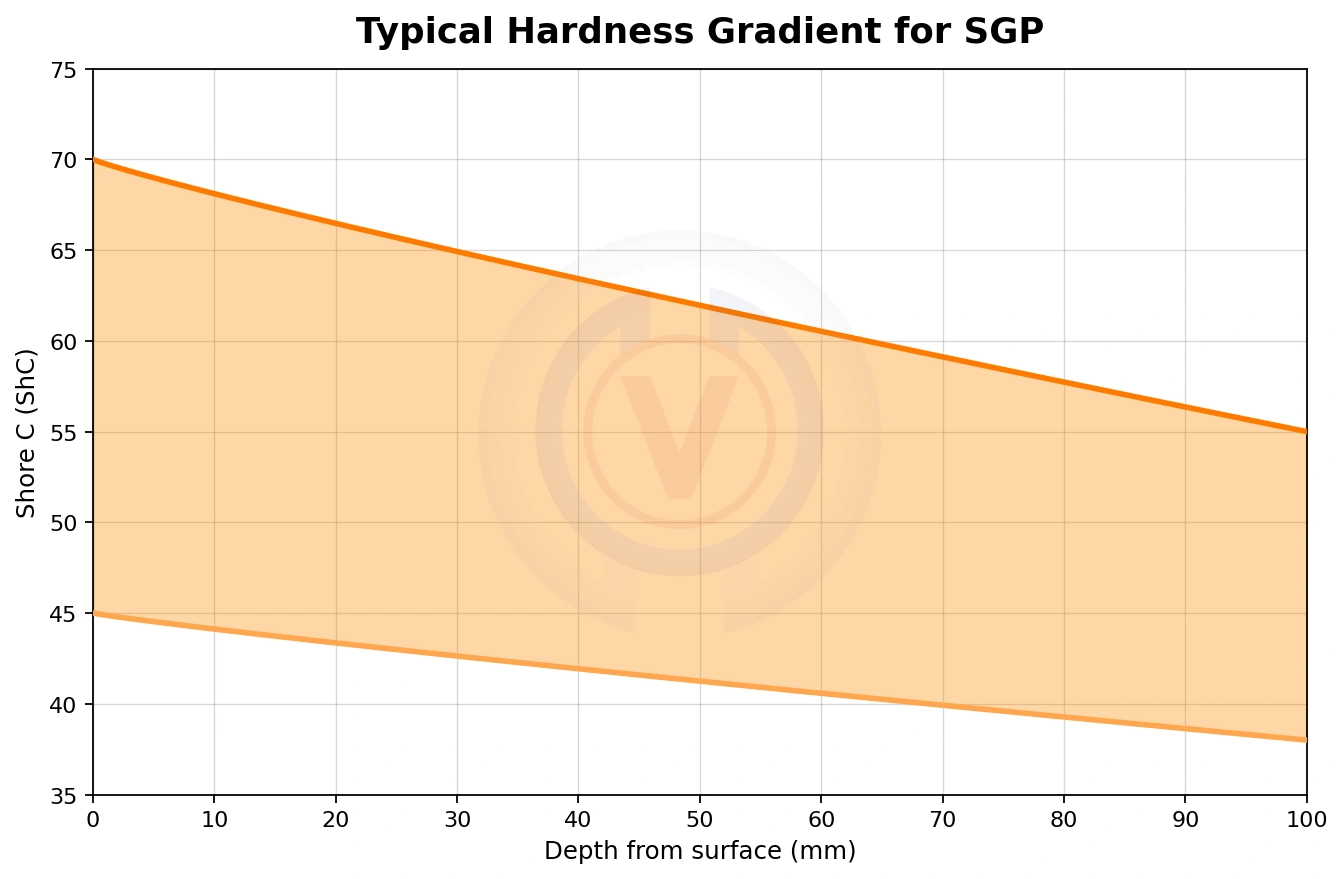
Due to
their indefinite chill characteristics, these rolls provide good hardness
penetration and stable microstructural distribution through the section.
SG Acicular Chill Nodular Iron (SG-AC, SGAC, or SGA) rolls are a type of indefinite chill cast iron rolling mill roll in which the graphite is present in nodular (spheroidal) form instead of flake form. The microstructure consists of spheroidal graphite and carbides distributed within a predominantly acicular bainitic matrix, characterized by a fine needle-like bainitic structure, often referred to as lower bainite.
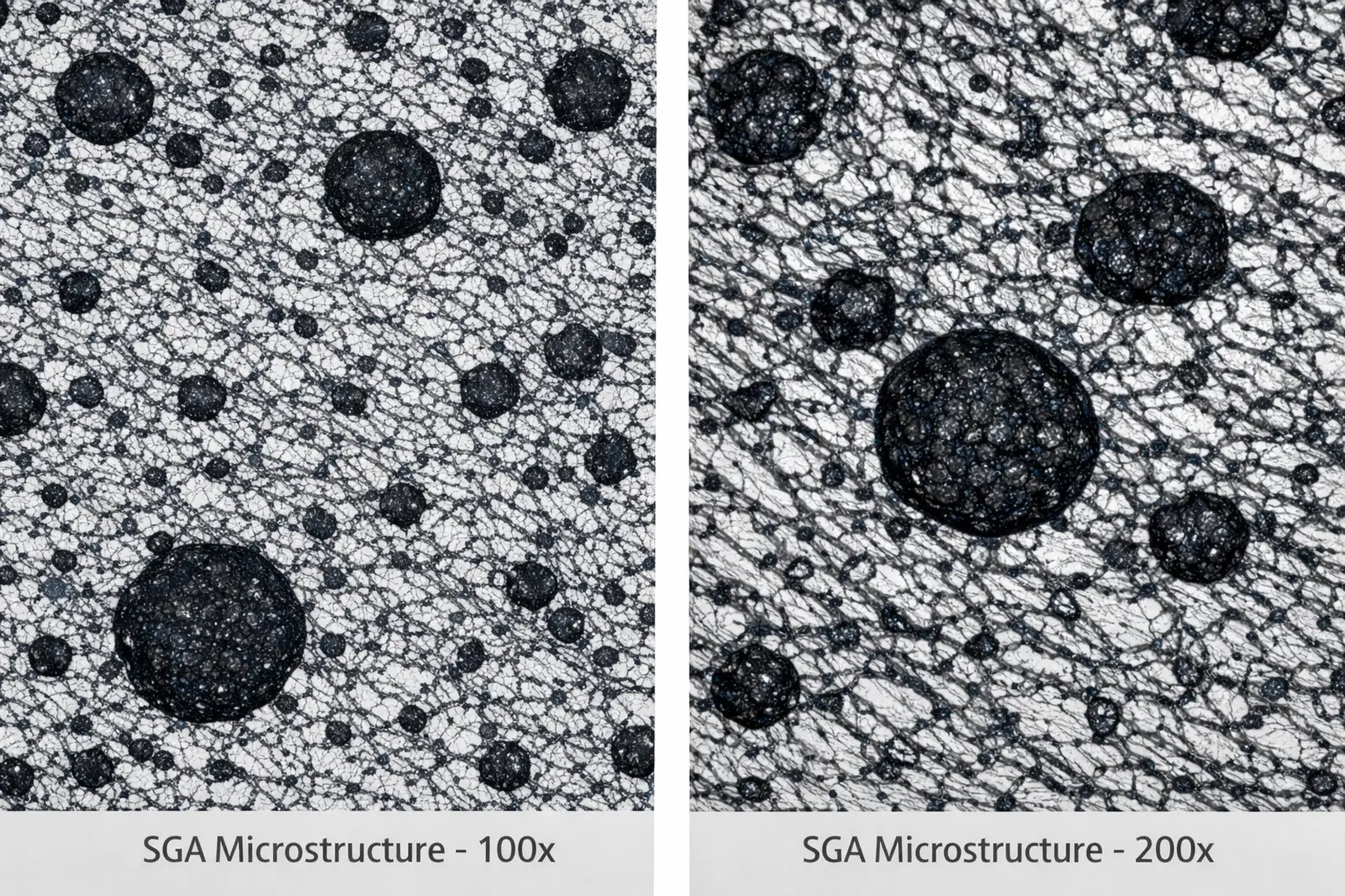
Compared with pearlitic nodular iron structures, the acicular bainitic matrix provides higher strength and improved wear resistance, allowing these rolls to operate at higher hardness levels.
The alloy content of SG Acicular Chill materials is generally higher than that of pearlitic grades, promoting the formation of a bainitic matrix with increased carbide volume fraction in the harder grades. As a result, SG Acicular Chill rolls typically offer better wear resistance than pearlitic nodular iron rolls of similar hardness, while pearlitic grades may provide somewhat higher resistance to fire-cracking.
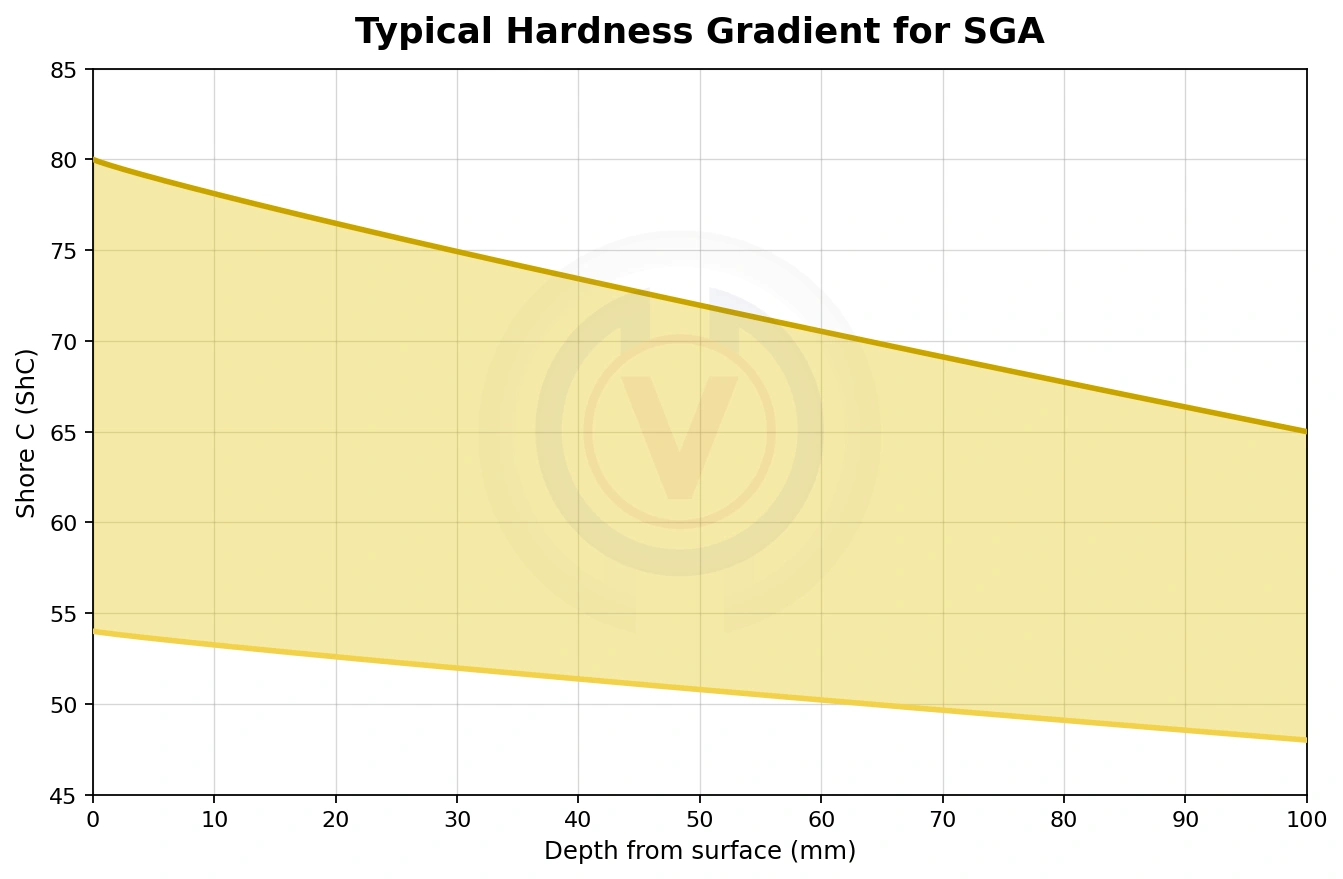
Due to their indefinite chill characteristics and alloyed bainitic structure, these rolls exhibit stable hardness penetration and consistent microstructural distribution through the roll section.
SG iron rolls can be tailored
on a case-by-case basis to meet specific rolling conditions. Effective
optimization requires close and transparent technical communication,
occasionally supported by on-site evaluation. Proper evaluation and controlled
fine-tuning are essential for success, and any adjustment must be carried out
with caution to avoid unintended consequences.
Roll optimization is a key
factor in performance, but it cannot address all issues on its own. Optimal
results require a combined approach, covering both roll grade optimization and
overall rolling mill conditions.
Below are some commonly used
optimization subgrades. However, SG iron tailoring is not limited to these
variants, and further fine-tuning may be necessary to suit the specific
conditions of each mill.
SG Iron Rolls belong to the broader family of cast rolling mill rolls used in steel rolling mills. Depending on roll design, mill configuration, rolling parameters and finished product, these rolls may be manufactured by static casting or centrifugal casting.
Vulcan Metal provides SG iron rolling mill rolls and other cast roll materials for steel rolling mills worldwide from Turkey.
For additional information, you can also consult our pages on
Cast Rolling Mill Rolls and
Centrifugal Cast Rolls.
In addition, you may refer to our dedicated pages covering the main cast roll material families: