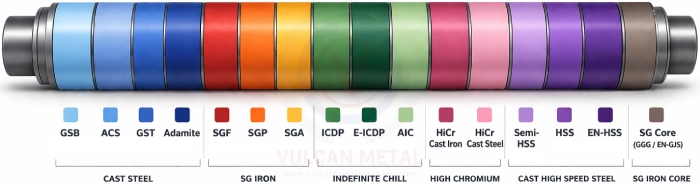
Indefinite Chill (IC) roll materials form a family of
cast rolling mill rolls characterized by the presence of both graphite and
carbides. This structure provides a balanced combination of wear resistance,
thermal stability and mechanical reliability, placing these materials between
SG iron grades and more carbide-dominant roll materials.
Indefinite
chill grades are used in both flat and long product rolling, but their roles
are fundamentally different. In flat rolling, these materials are mainly used
for work rolls where resistance to wear and thermal fatigue is critical for maintaining surface stability. In long product rolling, indefinite chill materials are
selected primarily for surface finish quality.
The terminology associated with these materials is not always
strictly metallurgical and may vary depending on manufacturers’ marketing
practices. As a result, the same material can be described under many different
names. Evaluation should therefore be based primarily on chemical composition
and microstructure rather than grade designations.
ICDP, E-ICDP and AIC grades belong to the same metallurgical family but do not
follow a linear progression. Each grade is defined by a different balance of
graphite, carbides, and matrix structure, resulting in distinct performance
characteristics.
Selecting the most suitable indefinite chill
roll grade therefore often requires a case-specific technical evaluation. A brief technical exchange with Vulcan Metal can help determine the most appropriate solution based on current roll materials, mill configuration and operational experience.
The table below provides a simplified comparative metallurgical overview of these indefinite chill roll materials.
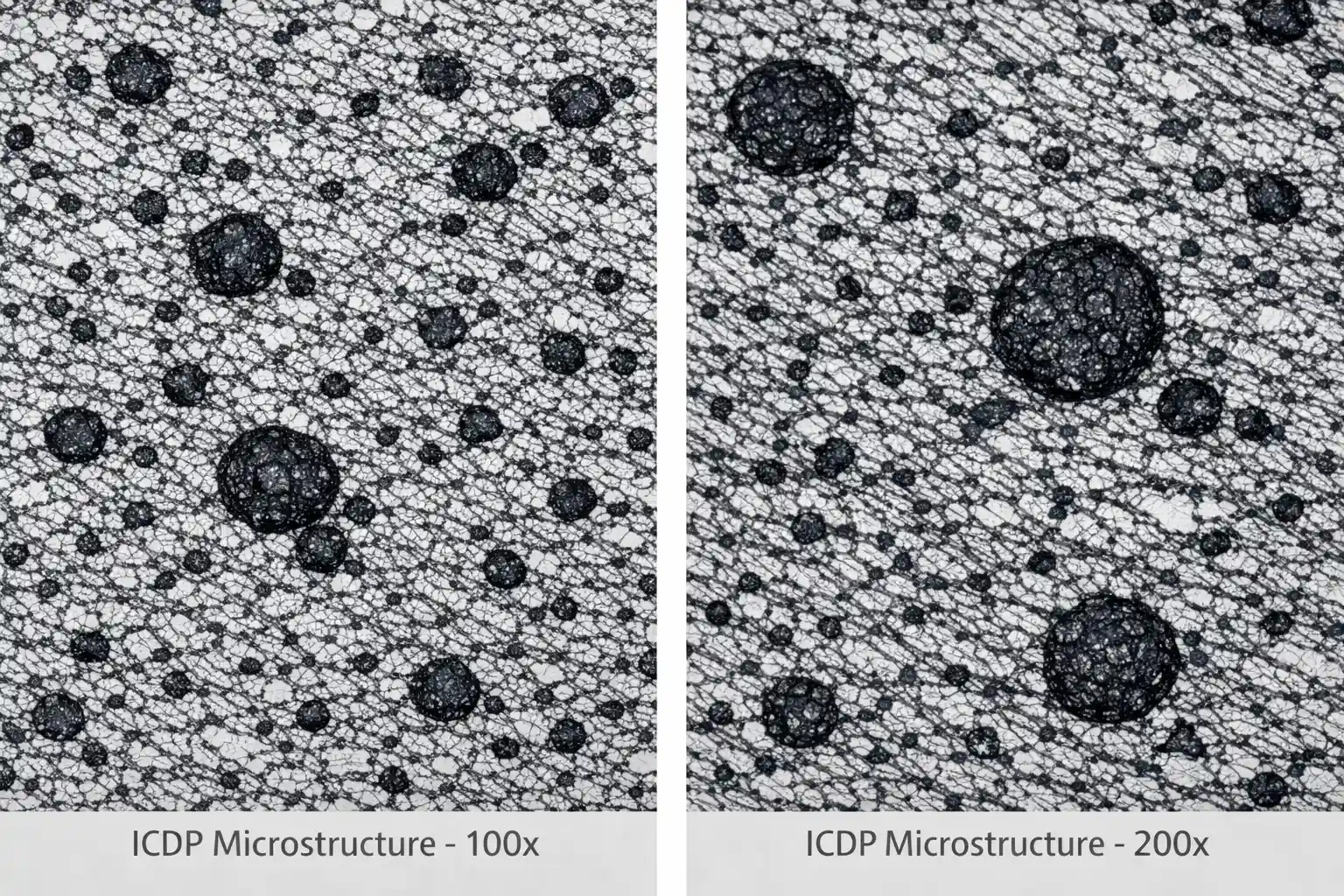
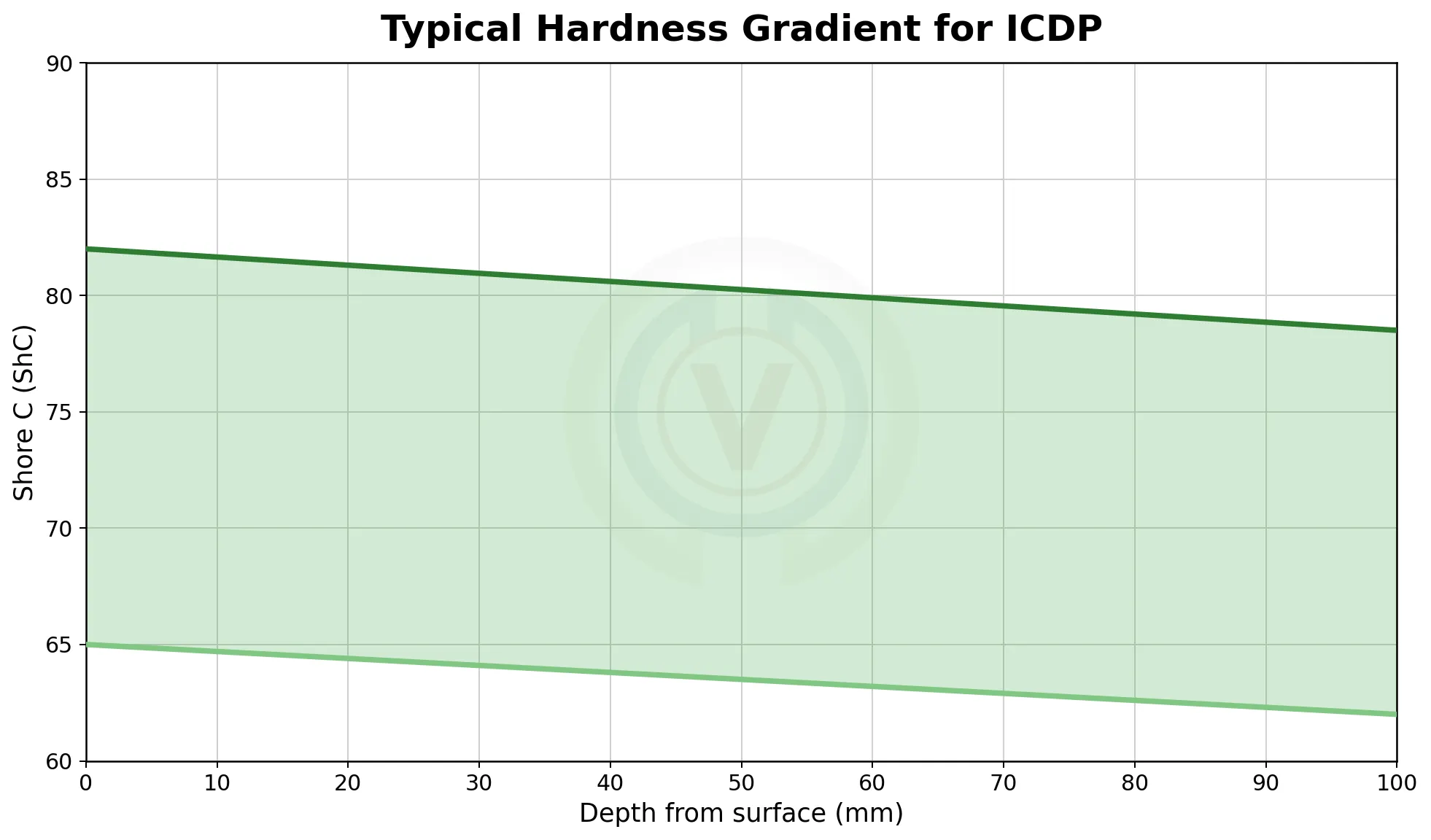
Indefinite Chill Double Poured (ICDP) rolling mill rolls are characterized by a pearlitic-bainitic matrix containing both graphite and carbides, providing balanced wear resistance and stable performance under thermal and mechanical loading.
ICDP rolls are manufactured by centrifugal casting using a
composite design, featuring an indefinite chill working shell and a spheroidal
graphite iron (SG / GGG) core. This composite structure ensures high internal
soundness and mechanical strength in the core while maintaining the required
surface properties in the shell.
These rolls are primarily associated with flat rolling applications as work rolls, where stable surface condition, resistance to wear and thermal fatigue are critical. They are also used in long product mills where surface finish is a key requirement.
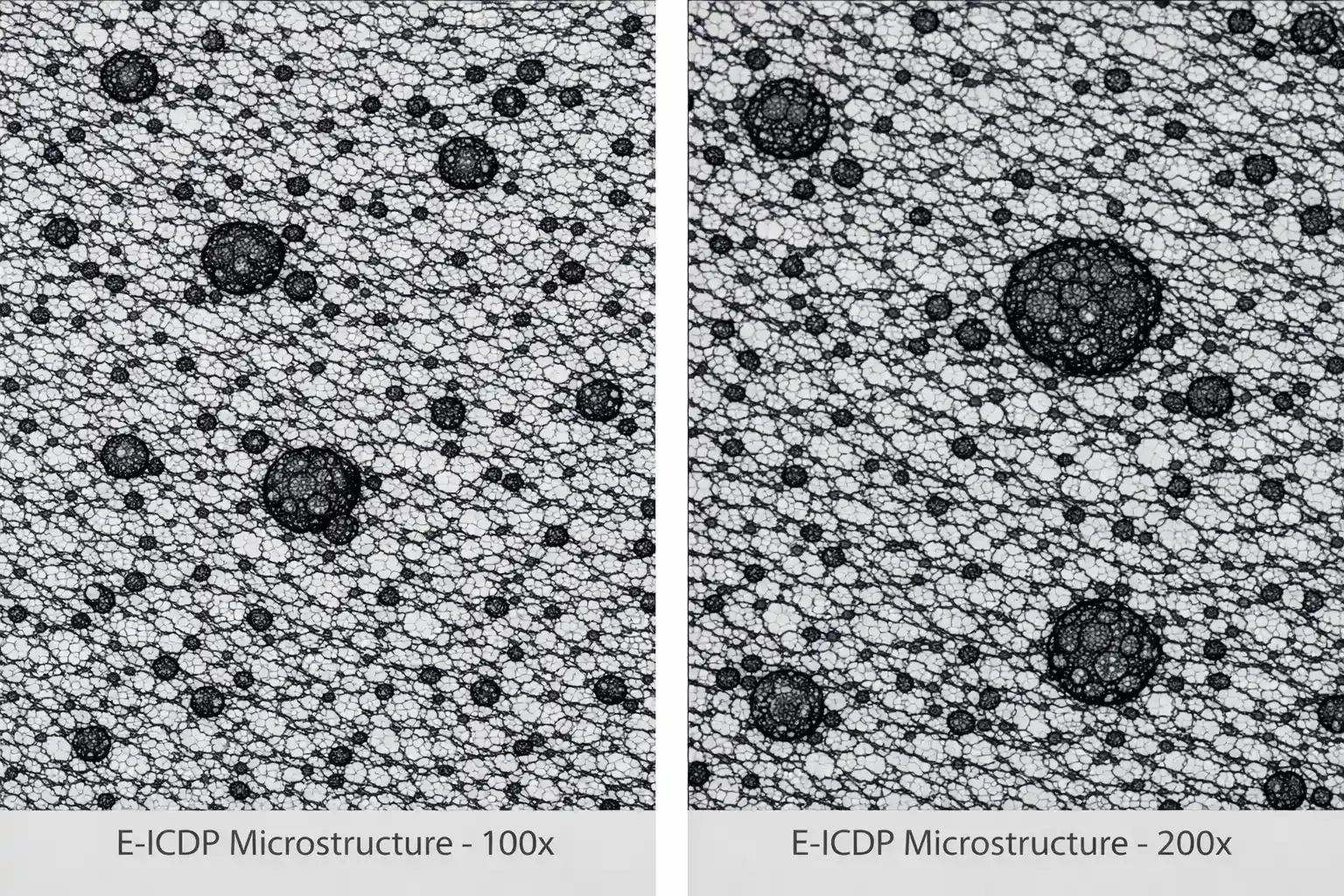
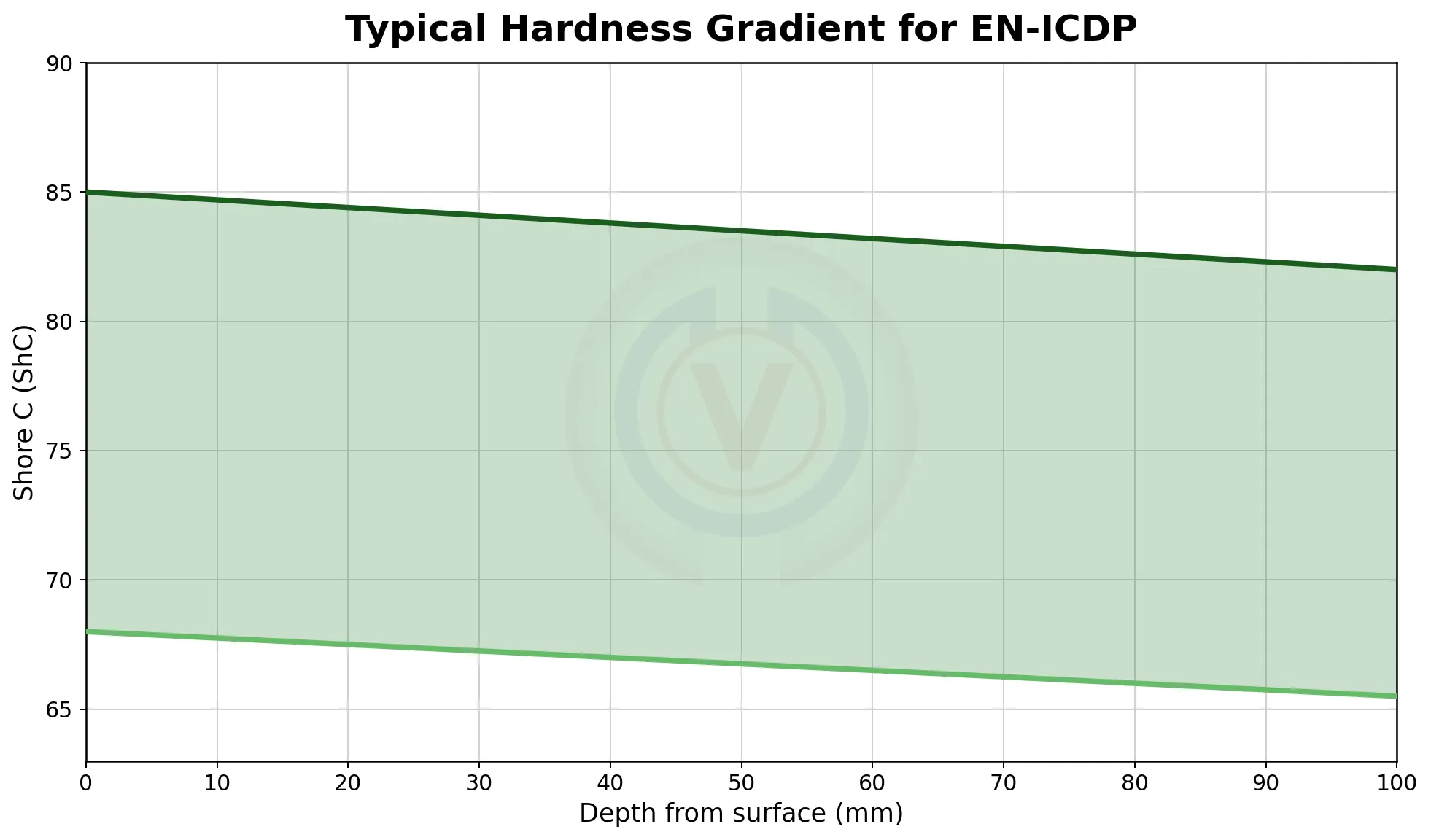
Enhanced ICDP (E-ICDP) rolling mill rolls are characterized by a graphite-carbide structure within a pearlitic-bainitic matrix. Compared with standard ICDP, graphite content is reduced while carbide volume is increased, resulting in improved wear resistance with a corresponding reduction in thermal fatigue resistance.
Same as ICDP rolls, E-ICDP rolls are also manufactured by centrifugal casting using a
composite design, featuring an indefinite chill working shell and a spheroidal
graphite iron (SG / GGG) core. This composite structure ensures high internal
soundness and mechanical strength in the core while maintaining the required
surface properties in the shell.
These materials are primarily used in flat rolling applications where higher wear resistance is required. Compared with ICDP, E-ICDP is typically selected when wear becomes the dominant factor. E-ICDP rolls may also be used in long product mills in specific cases where increased wear resistance is required without moving to more carbide-dominant grades.
Alloy Indefinite Chill (AIC) rolling mill
rolls are characterized by the presence of both graphite and carbides in a
pearlitic–bainitic matrix. They represent a distinct group within the
indefinite chill family. Where alloying is used to modify the balance between
graphite, carbides and matrix structure to achieve high surface finish quality.
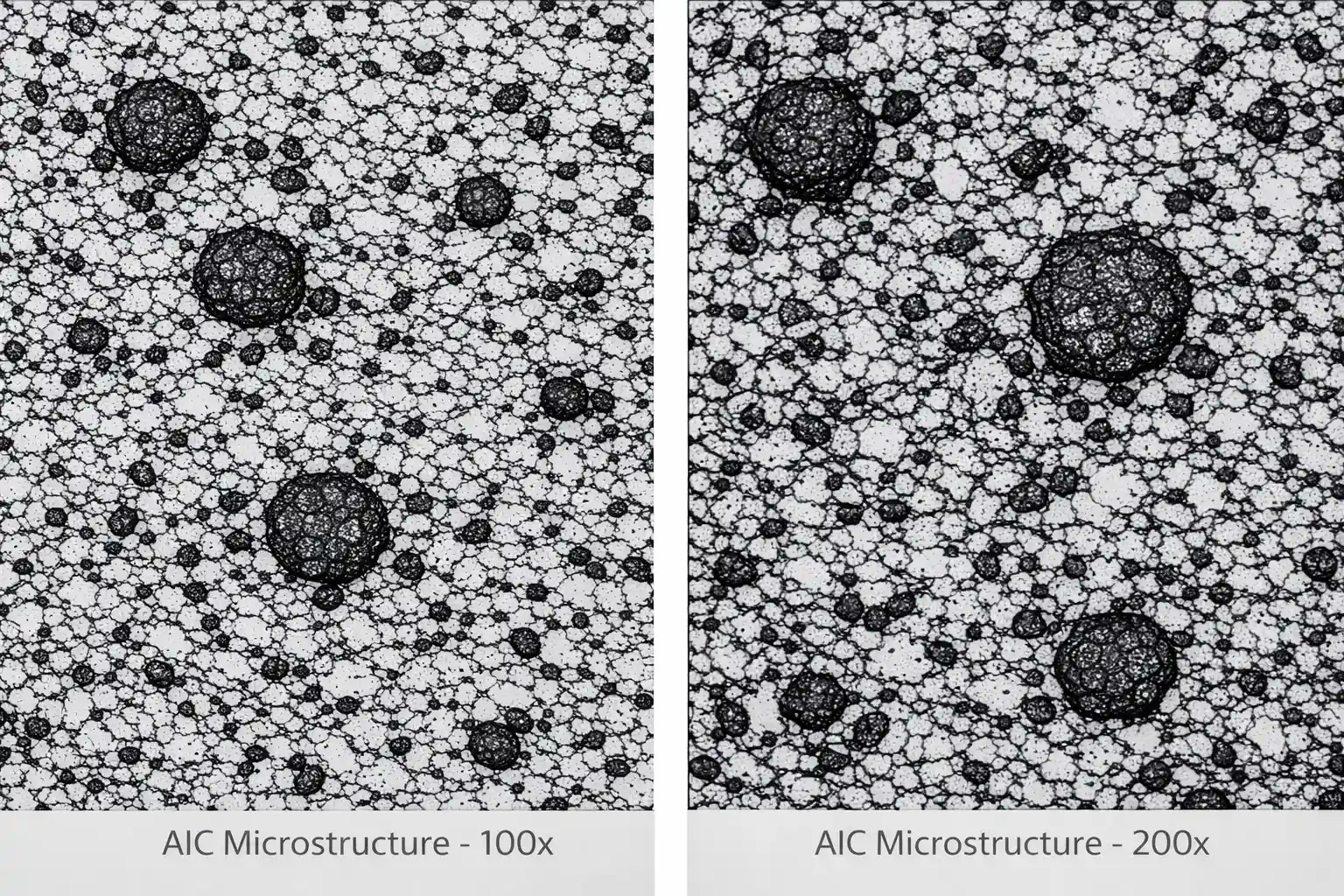
The microstructure consists of a
pearlitic–bainitic matrix with dispersed graphite and alloyed carbides.
Depending on chemical composition and heat treatment, variations in graphite
distribution, carbide content and matrix structure can be obtained.
AIC rolls can be manufactured
by both static and centrifugal casting. However, static casting results in a
homogeneous structure without a differentiated core, leading to lower
mechanical properties and increased brittleness. Such rolls should only be used
when these limitations are clearly understood.
Centrifugal casting is strongly
recommended, as it enables a composite structure with an alloyed indefinite
chill shell and a spheroidal graphite iron SG (GGG) core. This configuration provides improved internal soundness and
mechanical strength while maintaining the required surface quality.
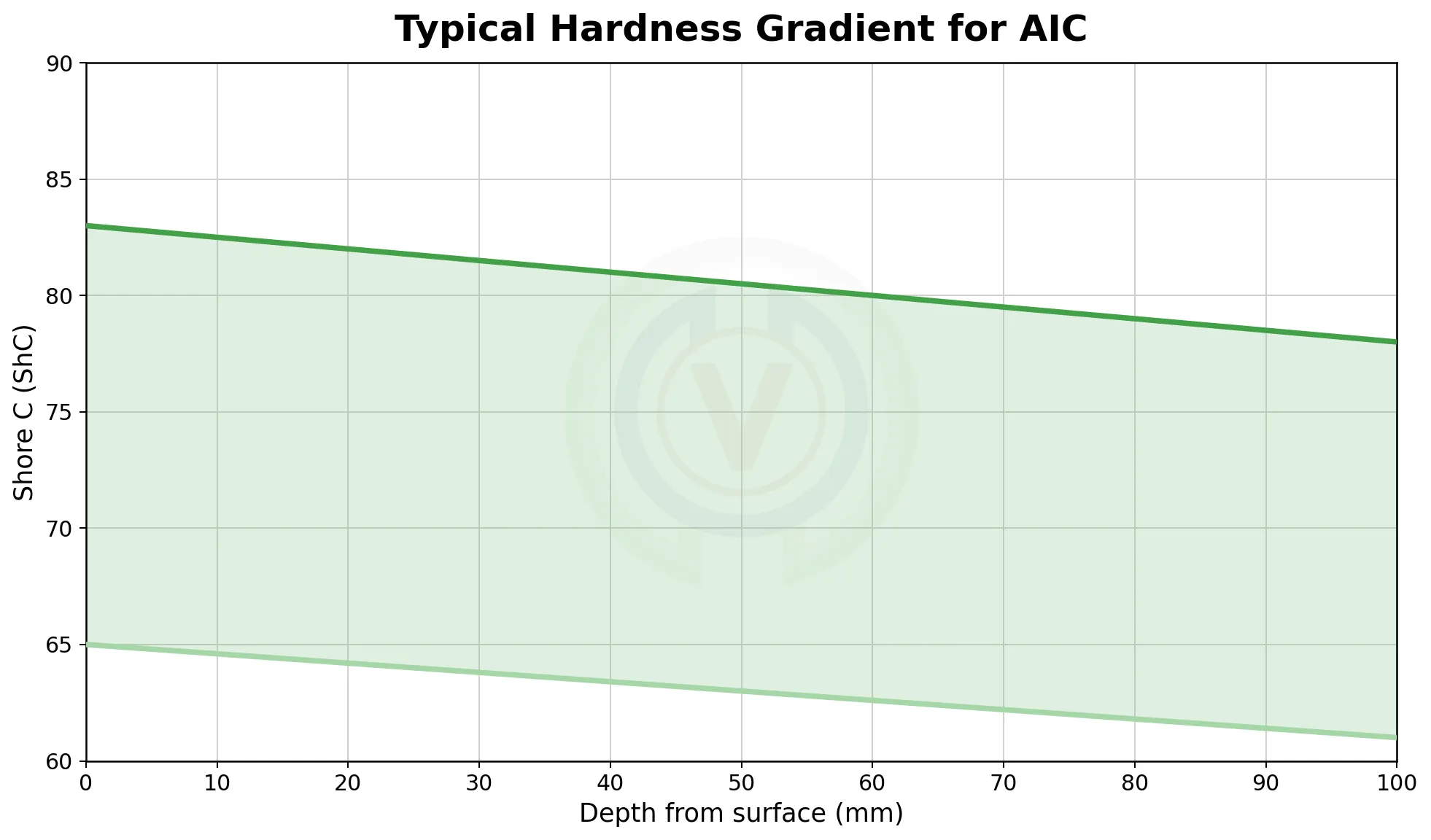
AIC rolls are mainly used in long product mills
in cases where surface finish quality becomes the key selection factor. They
should be considered as a case-specific solution for products requiring high
surface quality. For these rolls, centrifugal casting should be selected to
ensure sufficient mechanical properties and to reduce the risk of roll failure,
particularly breakage.
Indefinite Chill (IC) Rolls belong to the broader family of cast rolling mill rolls used in
steel rolling mills. Although AIC rolls can be statically cast, Vulcan Metal strongly recommends centrifugal casting for all indefinite chill rolls.
Vulcan Metal provides indefinite chill cast iron rolling mill rolls and other cast roll materials for steel rolling mills worldwide from Turkey.
For additional information, you can also consult our pages on
Cast Rolling Mill Rolls and
Centrifugal Cast Rolls.
In addition, you may refer to our dedicated pages covering the main cast roll material families: