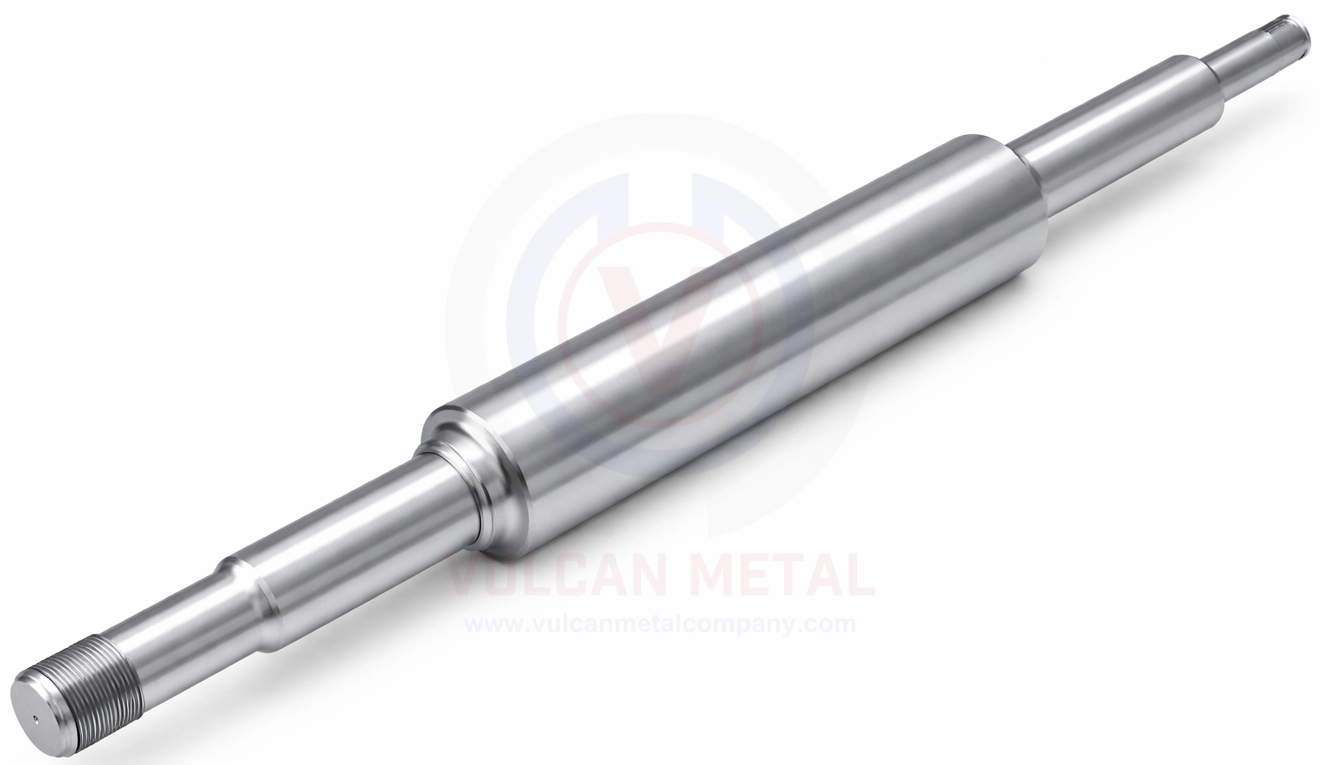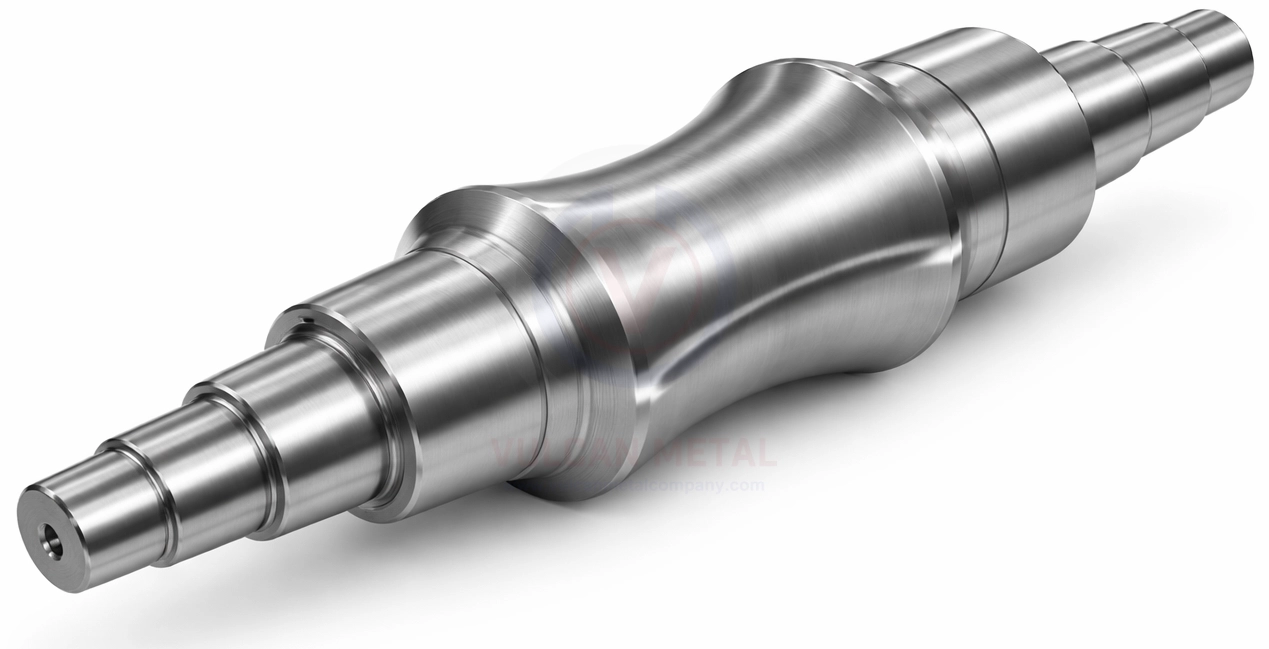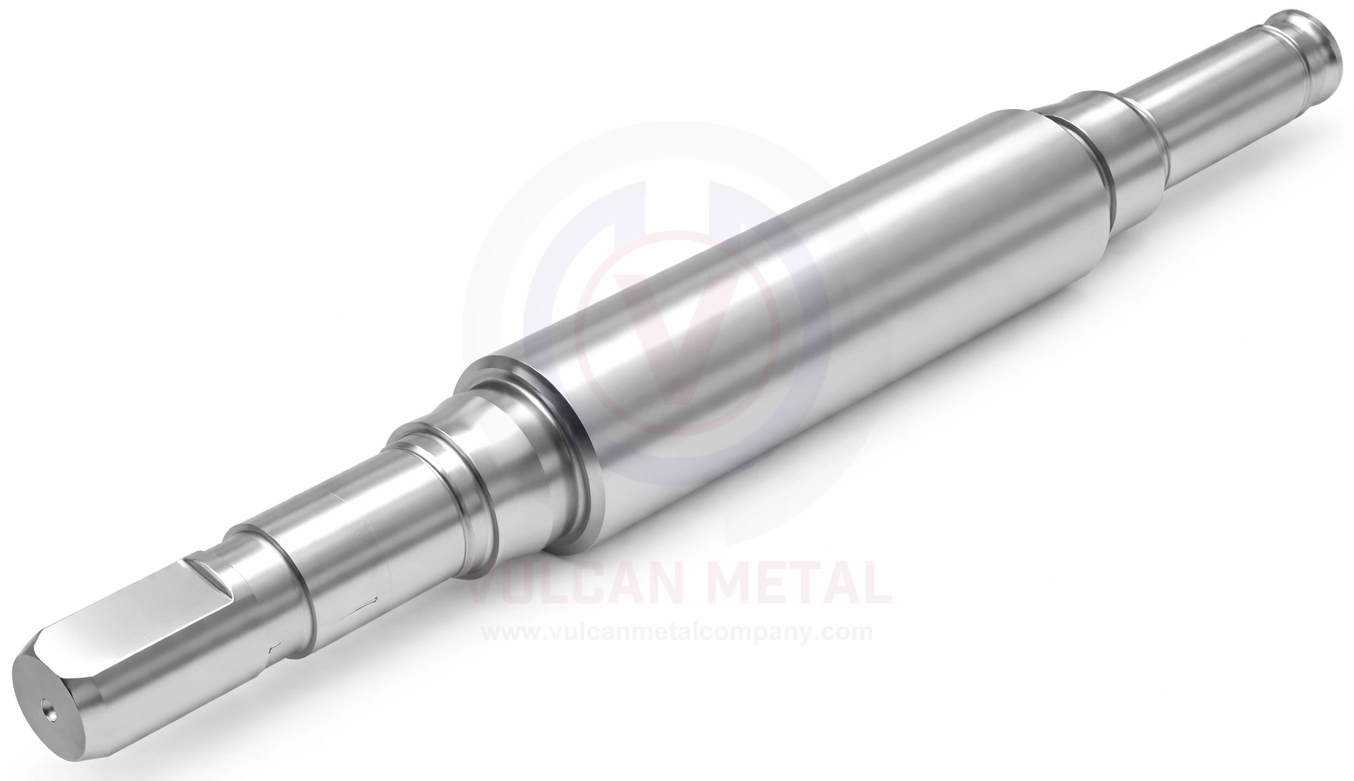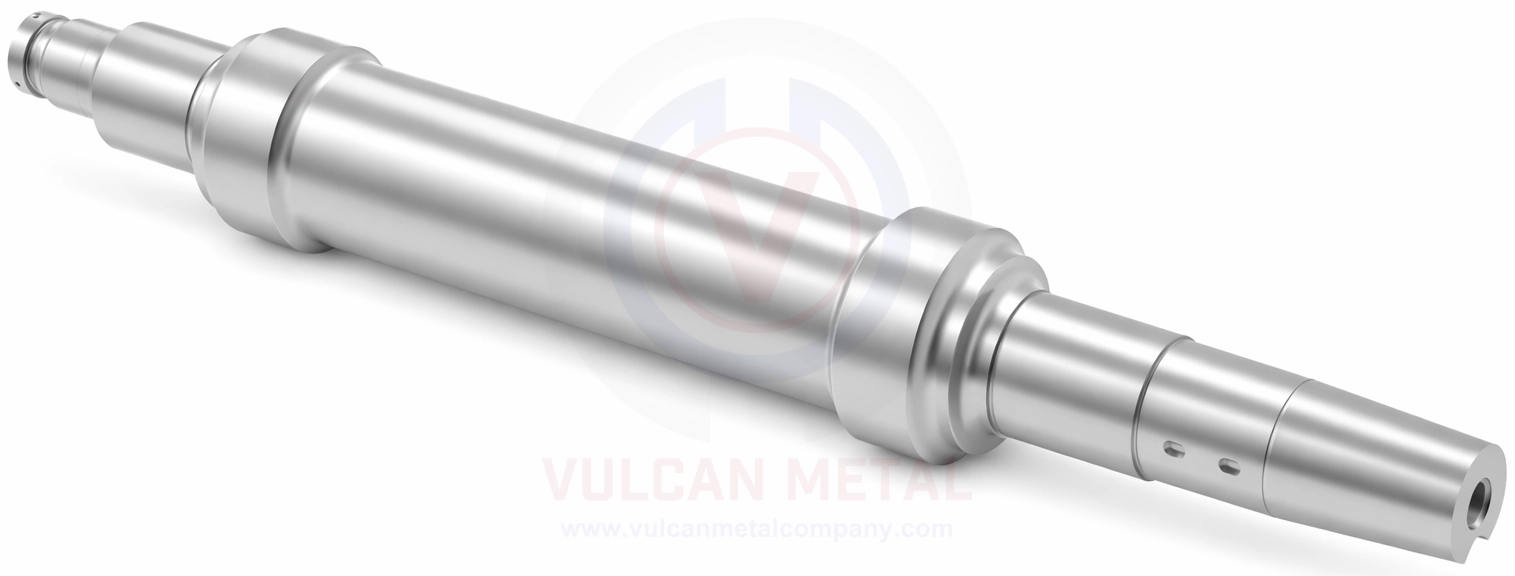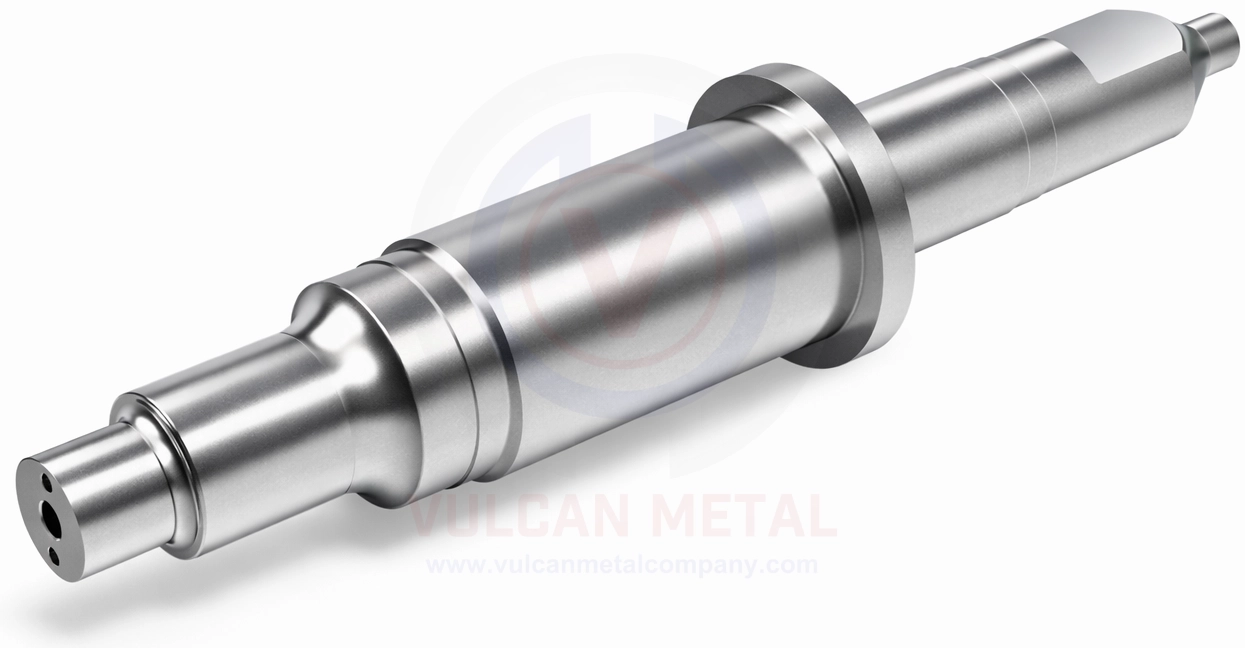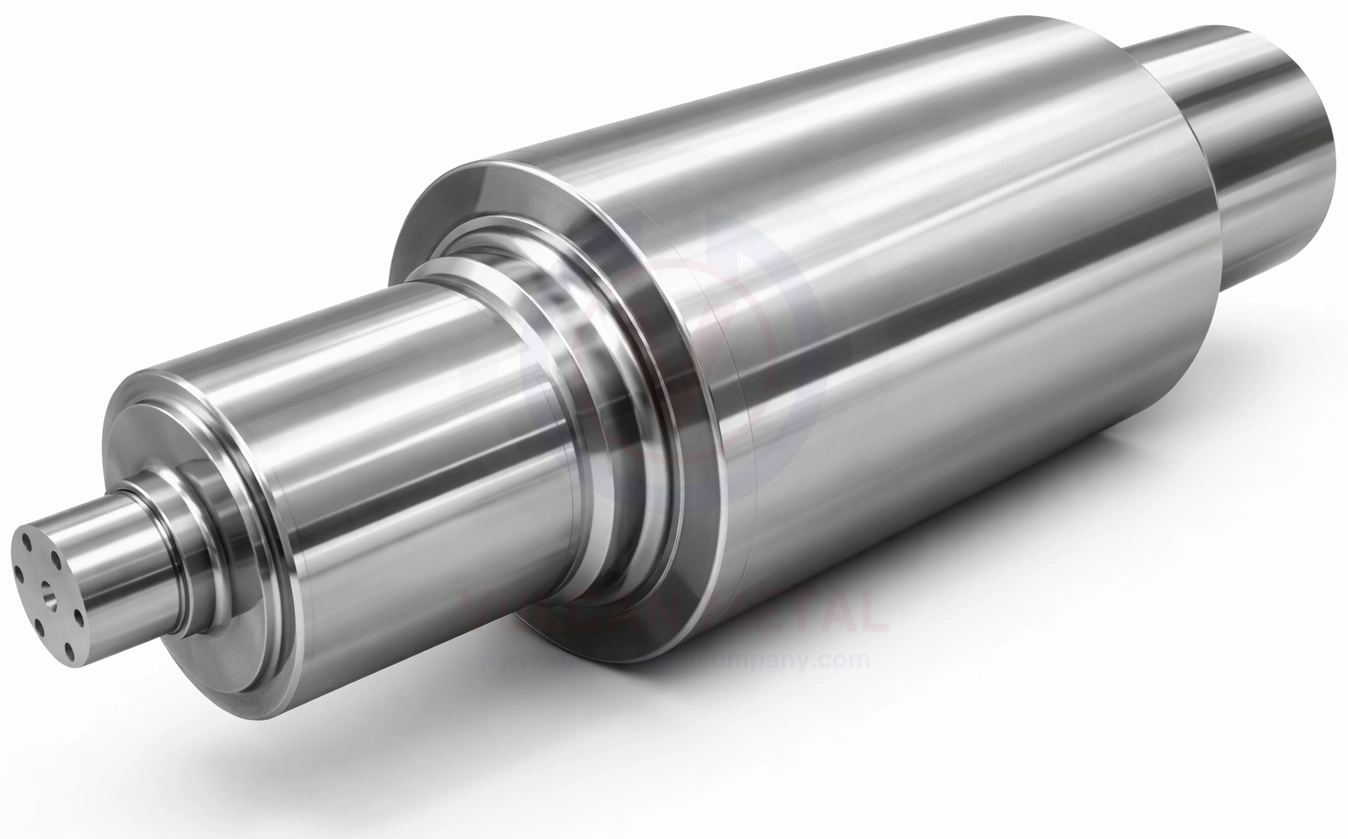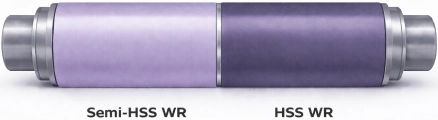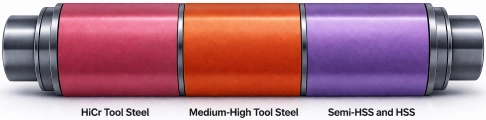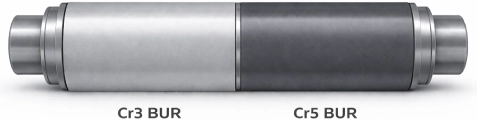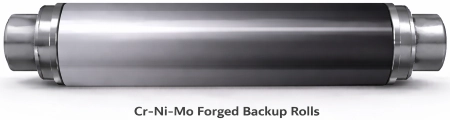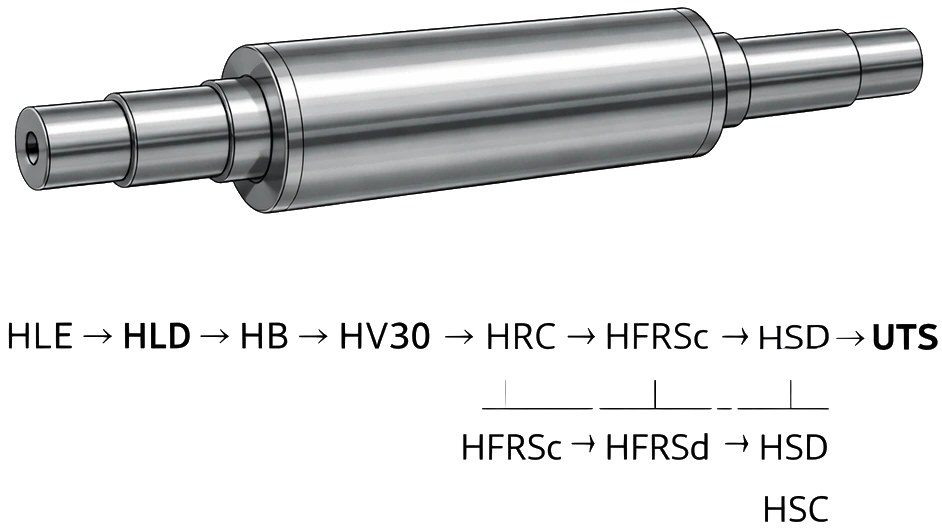
Vulcan Metal provides forged roll, ring, sleeve and shaft (arbor) solutions tailored to specific needs of hot steel, cold steel and aluminum mills through our manufacturing partners. We offer an extensive range of grades with varying sizes.
The quality management system of our partners is certified to ISO 9001:2015 in full compliance with global industry requirements.
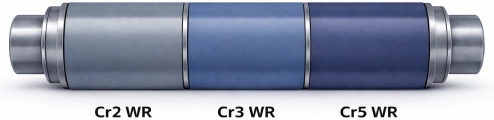
Our forged grade range includes carbon steel and alloyed steel grades varying from 0,40 to 12,00% chromium content, as well as special alloyed steel grades. The precise grade selection is determined by customer requirements.
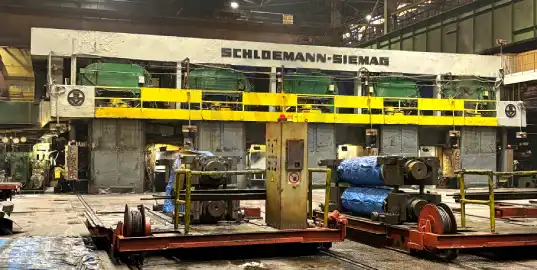
The performance of forged rolling mill rolls is determined by the entire manufacturing process. Neither material grade, nor roll type, nor mill type alone defines roll performance.
Steel cleanliness is fundamental. Control of inclusions, macro-segregation, and carbide distribution directly influences surface performance and internal integrity.
Conventional ingots are produced by static casting, where segregation and structural inhomogeneity may develop during solidification. ESR ingots are re-melted and solidified under tighter control, improving cleanliness and reducing segregation, resulting in a more uniform structure.
Ingot quality directly affects internal integrity, hardened layer stability, and performance consistency through campaigns. Higher structural uniformity becomes increasingly important in demanding applications.
ESR ingots are preferred in demanding applications due to improved cleanliness and a more uniform structure. Conventional ingots remain suitable for cost-sensitive or less demanding conditions, where the mill setup and operating targets do not fully benefit from ESR rolls.
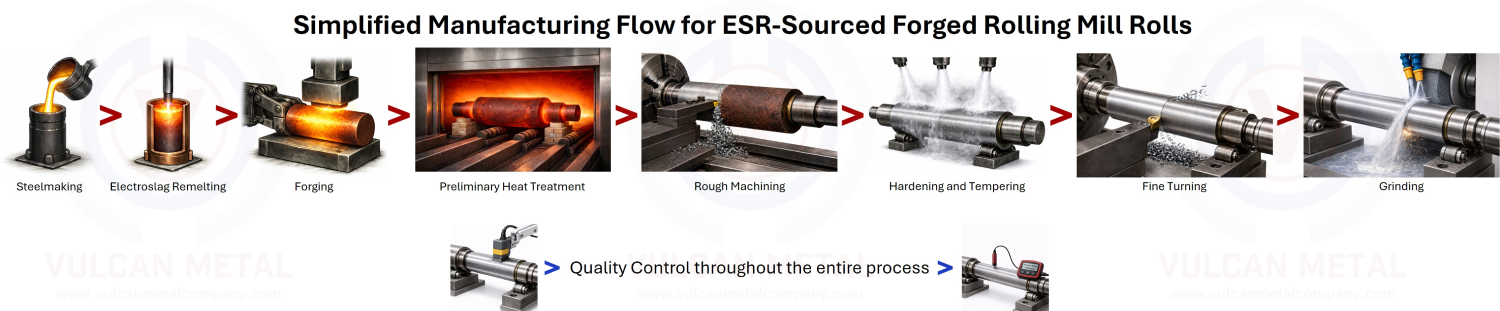
Forging establishes internal integrity and structural uniformity. Forging parameters such as temperature, reduction ratio, and deformation rate control grain refinement. They promote redistribution of segregation and carbides throughout the section, directly influencing hardening response and hardness profile consistency.
The structural inhomogeneities form during solidification and depend on ingot quality. ESR reduces their formation, while conventional ingots rely more heavily on forging to improve the final structure.
Forging is essential to break down segregation and refine carbides across the section. It cannot compensate for poor ingot quality, but when properly executed, it significantly improves structural consistency and contributes to stable roll performance.
Heat treatment determines the final microstructure, hardness profile, and residual stress distribution. It acts on the structure established during steelmaking and forging; segregation and defects formed earlier in the process cannot be eliminated at this stage.
The resulting microstructure defines the effective hardened layer depth and its uniformity, as well as the balance between hardness, strength, and toughness required for stable operation.
Residual stress distribution is critical. It influences crack initiation, thermal behaviour, load-bearing behavior, and subsurface fatigue resistance. These factors directly affect both surface durability and the overall structural stability.
The objective is to achieve sufficient hardened layer depth, uniform hardness, and controlled residual stress distribution, together with the required strength–toughness balance.
This balance governs both surface durability and subsurface fatigue resistance, ensuring stable performance through rolling campaigns.
Grinding directly affects final roll performance and service life. It determines surface integrity and influences stress distribution near the surface.
Improper grinding can introduce tensile residual stresses, thermal damage, and surface defects. These increase crack sensitivity and weaken the roll’s resistance to wear, thermal fatigue, subsurface fatigue, and spalling.
Grinding is not a secondary finishing step; it is a critical part of final roll quality.